


How Much Does a Coffee Franchise Cost in the Philippines and What Investors Should Consider Before Getting Started
Published: August 2026
The Philippine coffee industry continues to attract entrepreneurs who want to build
businesses around one of the country's most popular everyday beverages. Coffee has become
more than a morning routine. It has become part of work culture, social gatherings,
lifestyle, and daily convenience.
For aspiring entrepreneurs, this creates an interesting opportunity.
Instead of starting an independent café completely from scratch, many business owners
consider investing in a coffee franchise. A franchise can provide access to an established
brand, operating systems, store concepts, training, equipment, marketing support, and a
business model that has already been structured for expansion.
But one of the first questions potential franchisees ask is simple:
How much does a coffee franchise cost?
The answer depends on several factors, including the brand, store size, location, equipment
requirements, construction, staffing, operating expenses, and the business model.
For anyone considering a coffee franchise in the Philippines, looking only at the franchise fee is
not enough. A better approach is to understand the complete investment and what is included in the
franchise package.
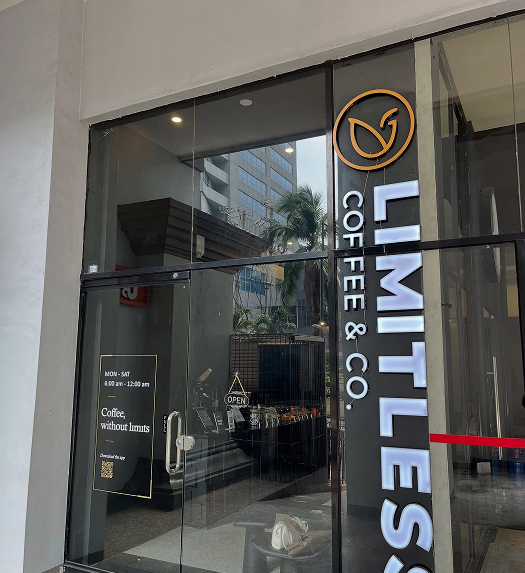
One brand worth exploring is Limitless Coffee & Co., which offers a franchise opportunity built
around a modern coffee concept, technology, and a distinctive subscription-based business model.
This guide explores the potential costs involved in opening a coffee franchise, the expenses
investors should prepare for, and why choosing the right franchise model can be just as important as
the initial investment.
Understanding the Cost of a Coffee Franchise
The total cost of opening a coffee franchise can vary significantly from one brand to another.
Some concepts are designed for small kiosks or compact spaces, while others require larger cafés
with extensive seating areas and more equipment.
A franchise investment can generally involve several major categories:
- Franchise and brand-related fees
- Store construction and fit-out
- Coffee and kitchen equipment
- Furniture and fixtures
- POS and technology systems
- Initial inventory
- Permits and business registration
- Staff recruitment and training
- Marketing
- Working capital
- Pre-opening expenses
This means the advertised franchise price should be viewed as part of the overall investment rather
than the complete cost of starting the business.
For prospective franchisees, understanding these different expenses can make financial planning much
more realistic.
The Franchise Fee Is Only One Part of the Investment
One common misconception is that the franchise fee represents the total amount needed to open a
café.
In reality, the franchise fee is generally associated with the right to operate under a particular
brand and access its franchise system, subject to the terms of the franchise agreement.
The total investment may also include the physical store, equipment, technology, initial supplies,
training, and other requirements.
This is why investors should always ask what is included in the franchise package.
A lower advertised franchise price does not necessarily mean that the business will require less
capital overall.
The better question is:
What will I actually need to spend before the store can open and operate successfully?
How Much Can a Coffee Franchise Cost in the Philippines?
There is no single standard price for a coffee franchise in the Philippines.
Investment requirements can range from relatively small amounts for compact concepts to several
million pesos for full-service cafés with larger spaces and more sophisticated operations.
Location is one of the biggest factors.
A café located in a high-traffic commercial area may require a different store size, fit-out, rental
commitment, and equipment setup compared with a smaller neighborhood location.
Store concept also matters.
A kiosk, takeaway-focused shop, traditional café, and larger premium coffee shop can have very
different investment requirements.
For this reason, potential franchisees should evaluate the business model, projected operating
costs, and location requirements together rather than focusing only on the headline franchise price.
The Major Expenses Investors Should Prepare For
Understanding where the money goes is one of the most important steps before investing in a coffee
franchise.
1. Franchise and Brand Investment
The franchise investment gives the franchisee access to the brand and its established business
system according to the franchise agreement.
Depending on the franchisor, this may provide access to brand guidelines, operating procedures,
training, support, and other resources.
The value of a franchise therefore goes beyond the name displayed on the storefront.
A strong franchise system can help entrepreneurs avoid some of the uncertainty involved in creating
an independent café from the ground up.
2. Store Construction and Fit-Out
The physical store is usually one of the largest investments.
Costs may include interior construction, electrical work, plumbing, flooring, ceilings, counters,
lighting, signage, furniture, and other design requirements.
The final amount can vary depending on the condition of the location before construction begins.
A space that already has suitable infrastructure may require less work than an empty shell that
needs extensive renovation.
Store size also affects the budget.
Larger locations generally require more construction, furniture, equipment, and labor.
3. Coffee Equipment and Kitchen Equipment
A professional coffee business requires appropriate equipment.
Depending on the concept, this can include espresso machines, coffee grinders, refrigerators,
freezers, blenders, water filtration systems, ice machines, storage equipment, and other café tools.
Equipment quality matters because it can influence product consistency and operational efficiency.
Investors should therefore understand which equipment is included in the franchise package and which
items need to be purchased separately.

Technology Has Become Part of the Coffee Business
Modern cafés are increasingly using technology to improve the customer experience and manage
operations.
A coffee business may use POS systems, digital ordering, mobile applications, loyalty
programs, cashless payment systems, and other technology.
Technology can also provide businesses with better information about customer behavior and
purchasing patterns.
This is particularly relevant to Limitless Coffee & Co., which incorporates technology into
its customer experience.
Its concept includes a mobile app ecosystem that supports ordering, subscription management,
rewards, and other customer interactions.
For investors, this can represent a different approach from a traditional café that relies
primarily on walk-in customers and standard POS transactions.
Initial Inventory and Supplies
Before a café opens, it needs enough inventory to serve customers.
This may include coffee beans, milk, syrups, cups, lids, packaging, ingredients, cleaning supplies,
and other operating materials.
The exact inventory requirement depends on the menu and expected sales volume.
Franchisees should understand how initial inventory is handled and whether certain supplies must be
purchased through approved suppliers.
A consistent supply chain is important for maintaining product quality across franchise locations.
Permits, Registration, and Other Business Expenses
Opening a café also involves administrative and regulatory expenses.
Depending on the location and business structure, investors may need to account for business
registration, permits, local requirements, sanitation-related requirements, and other applicable
expenses.
These costs should be included in the financial plan from the beginning.
Ignoring smaller administrative expenses can create unexpected costs before opening.
A franchisee should work with the appropriate professionals and local authorities to understand the
requirements applicable to the planned location.
Staff Recruitment and Training
A coffee shop depends heavily on its employees.
Baristas, cashiers, supervisors, and other staff members all contribute to the customer experience.
Before opening, the business may need to recruit employees and provide training.
Training is especially important in a franchise because consistency matters.
Customers should receive a similar quality of product and service regardless of which branch they
visit.
This is one area where a franchise system can provide value.
A franchisor may provide operational training and guidelines that help franchisees establish
consistent procedures.
Working Capital Is an Important Part of the Budget
One of the most important expenses investors sometimes overlook is working capital.
Opening the store is only the beginning.
The business still needs money to operate while sales are building.
Working capital may be needed for:
- Employee salaries
- Rent
- Utilities
- Inventory replenishment
- Marketing
- Maintenance
- Software subscriptions
- Other operating expenses
A franchisee should avoid using every available peso simply to get the store open.
Maintaining an appropriate financial reserve can give the business more flexibility during its early
operating period.
Why the Business Model Matters as Much as the Investment
Two coffee franchises may require similar investments but produce very different business
experiences.
The difference often comes from the business model.
A traditional café may depend primarily on customers purchasing drinks during individual visits.
Another coffee concept may combine café sales with subscriptions, loyalty programs, mobile ordering,
delivery, and other revenue opportunities.
This is where Limitless Coffee & Co. offers a distinctive proposition.
The brand incorporates an unlimited coffee subscription model, creating a recurring membership
component alongside regular coffee sales.
For franchise investors, this model can provide a different way of thinking about customer retention
and repeat visits.
Instead of focusing exclusively on acquiring customers one transaction at a time, a subscription
model can encourage customers to return regularly.
Why Consider a Limitless Coffee & Co. Franchise?
Limitless Coffee & Co. positions itself around a modern coffee concept designed for a new
generation of coffee consumers.
Its concept combines coffee, technology, convenience, and subscription-based customer
engagement.
One of the notable elements is its approach to operating hours.
The brand's concept is built around extended accessibility, with a 24-hour store model
designed to serve customers throughout the day and night.
This creates opportunities to serve customers outside the traditional morning and afternoon
café periods.
For locations where there is demand from night-shift workers, students, travelers,
professionals, and customers looking for late-night convenience, extended operating hours
can create a differentiated proposition.

Why Limitless Coffee & Co. Stands Out in the Franchise Market
The coffee franchise market is competitive.
For a franchise concept to stand out, it needs to provide customers with a reason to choose it.
Limitless Coffee & Co. approaches the market with a combination of premium coffee, extended
accessibility, mobile technology, and subscription-based customer engagement.
Its unlimited coffee model is particularly distinctive.
Rather than relying entirely on individual transactions, the subscription model is designed to
encourage recurring customer relationships.
The mobile app further connects customers with the brand through ordering, subscriptions, rewards,
referrals, and digital payments.
For entrepreneurs searching for a franchise opportunity that combines a familiar product category
with a more modern business model, this can make Limitless Coffee & Co. worth considering.
Start Your Coffee Franchise Journey With Limitless Coffee & Co.
The Philippine coffee market continues to create opportunities for entrepreneurs who understand what
today's coffee customers want.
Convenience, quality, accessibility, digital ordering, and customer loyalty are becoming
increasingly important parts of the café experience.
A coffee franchise can give entrepreneurs access to an established brand and operating system while
allowing them to participate in a growing consumer market.
For those looking for a more modern concept, Limitless Coffee & Co. presents a franchise opportunity
built around more than traditional café operations.
Its combination of a 24-hour concept, premium coffee experience, mobile app ecosystem, and unlimited
subscription model creates a distinctive approach to the coffee business.
With an estimated investment of ₱2.8 million to ₱4.5 million, prospective franchisees can explore
whether the concept fits their financial capacity, preferred location, and business objectives.
Ultimately, the best franchise investment is not simply the one with the lowest cost.
It is the one that provides a business model, support system, customer proposition, and growth
opportunity that align with the entrepreneur's goals.
If you're considering entering the coffee industry, Limitless Coffee & Co. offers an opportunity to
become part of a modern coffee movement while building a business around a familiar and highly
consumed product.
The next step is to learn more, evaluate the numbers, study the location, and determine whether a
Limitless Coffee & Co. franchise is the right opportunity for you.